Writing · 6 min read
You Don’t Need a Finished Manuscript to Start Thinking Like an Author
Still writing your first book? You don’t need to have it all figured out before you begin.
By Lekshmi Baskar
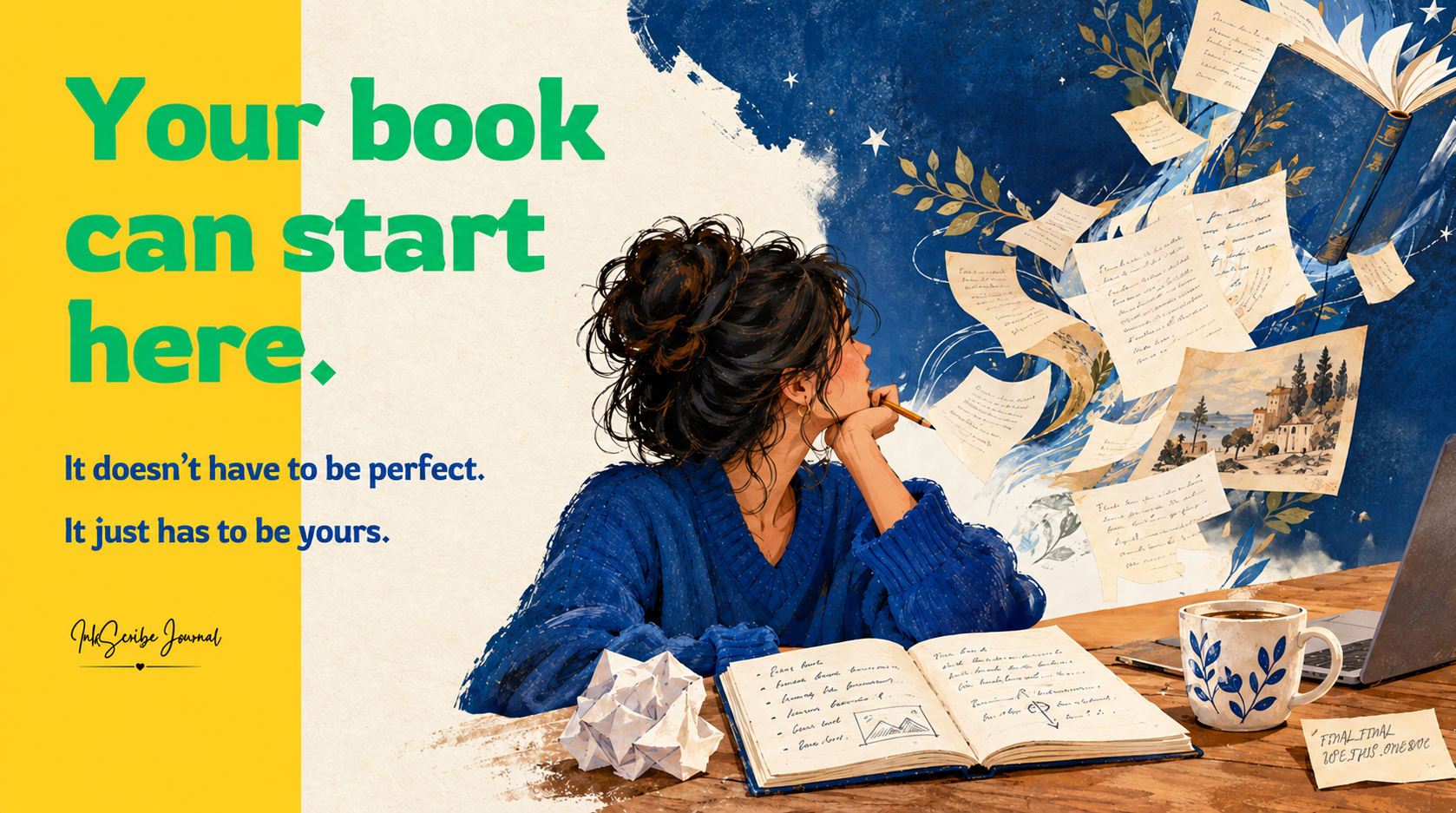
Maybe you have 40 pages. Maybe you have four.
Maybe you have an entire book in your head and exactly one paragraph in a Google Doc.
Maybe you’ve been rewriting Chapter One for so long that Chapter One is beginning to feel like a toxic relationship.
Or maybe your manuscript is technically finished. Except the file is called: FINAL.docx. Followed by: FINAL_2.docx. Followed, naturally, by: FINAL_FINAL_USE_THIS_ONE.docx
Welcome home. You’re probably a writer!
You don’t need a published book, an ISBN or a photograph of yourself staring thoughtfully out of a window to qualify.
Becoming an author starts much earlier than publication. Often, it starts with an idea that refuses to leave you alone.
“But I haven’t actually written the book yet.”
Someone asks what you do. You almost say, “I’m writing a book.” Then your brain adds:
Well… sort of. It’s not finished. What if it never gets published?
So instead you say, “Oh, I’ve just been writing something.”
Something. As if 30,000 words accidentally fell out of your laptop.
There seems to be an invisible point at which we’re allowed to call ourselves writers. After finishing. After finding an editor. After publishing. After selling enough copies.
The problem is that the line keeps moving.
If you’re writing, you’re writing.
The book doesn’t need permission to exist yet. Neither do you.
A book rarely begins by looking like a book
Published books are terribly misleading. Chapter One confidently knows it is Chapter One. The characters seem to have known who they were all along.
You don’t see the deleted scenes, the chapter that moved three times or the phone note that became Chapter Seven.
Books don’t begin looking like books. They become books.
That messy middle is usually evidence that you’re doing the work.
How to start writing a book when the idea is still taking shape
ISBNs and cover designs can wait. Start by understanding the book you’re trying to write. No forty-page strategy document required.
Why do I want to write this?
Why do you care enough to spend months, sometimes years, with this idea?
Who am I writing it for?
Who will see this book and think, That’s for me? “Everyone” probably needs narrowing down.
What do I want them to leave with?
A feeling? An answer? A question? A different way of looking at something?
You don’t need perfect answers. They will probably change.
Write a few sentences down under each question. Then give the book itself a page. Start with the scene, memory or explanation you can see most clearly.
It doesn’t have to become Chapter One. You can discover the beginning while writing the rest.
Finish before you perfect
There is a point where improvement quietly becomes avoidance.
You rewrite Chapter Two because Chapter Three scares you. You research fonts, create an author bio and decide your acknowledgements will be incredibly moving.
There is only one small issue. You are on page 63!
We fully support unnecessary stationery purchases in the name of creativity. But eventually, you do have to write the book.
Your early draft has one very important job: it needs to exist.
It doesn’t need to impress anyone yet. Editing can improve something that exists. It cannot do much with the brilliant book you haven’t written because you’re still fixing paragraph three.
When a missing detail stops you, leave “check this later” and keep going. Choose a writing session you can manage, rather than a word-count promise you already dread.
For more help, try our guide to working through writer’s block and building a consistent writing habit.
Becoming an author doesn’t require an Instagram strategy
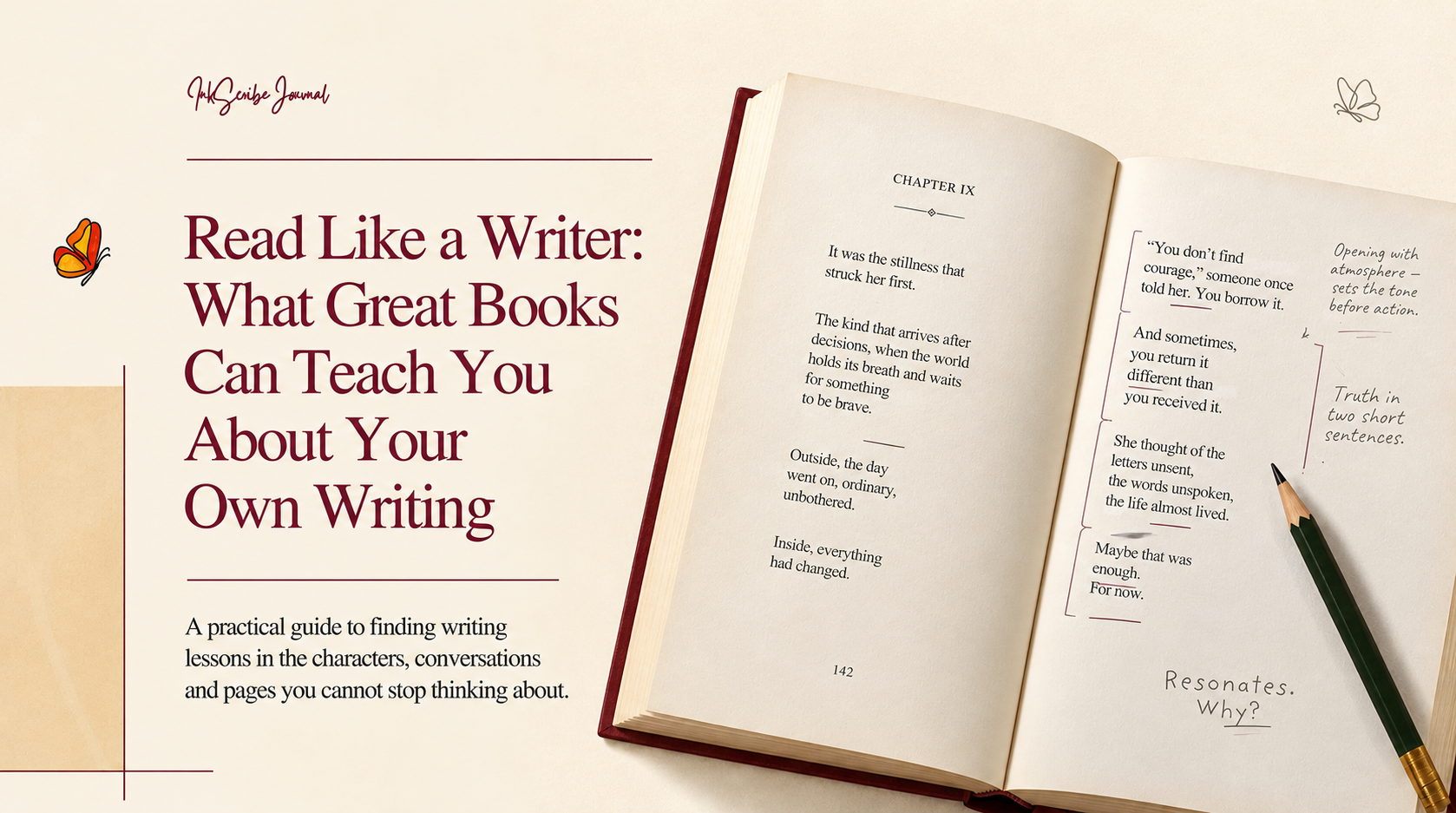
Read books in your genre. Notice what kept you reading, where you got bored and what stayed with you.
For nonfiction, look at how the writer explains unfamiliar ideas and supports their claims.
Talk to other writers. Visit bookstores. Read reviews (including the disappointed one). You’re learning the world your book will enter.
That’s author work too.
If sharing your writing process excites you, share it. If you prefer to work quietly, that’s fine. You don’t need to perform being an author while becoming comfortable being a writer.
The marketing department in your head can have its meeting later.
Is your manuscript finished, or ready to publish?
Finishing means you reached the end. That deserves a moment.
Then comes distance, rereading and revision. Possibly feedback from beta readers or an editor. Almost certainly a paragraph you’re irrationally attached to.
| A finished draft | A manuscript ready to publish |
|---|---|
| You’ve reached the end of this version. | You’ve worked through the changes the book needs. |
| You can now read and revise the whole book. | The structure, language and final checks have had attention. |
| You have something complete to improve. | You have reasons to share it beyond wanting it to be finished. |
There isn’t one test that certifies a book as ready. But this question helps:
Would another change meaningfully make this book better?
You can always change something. An outside reader can help you see what actually needs attention.
You don’t need to diagnose your editing needs
Developmental editing. Substantive editing. Copyediting. Proofreading. Everyone seems to know the difference except the person who has just finished writing their first book.
You shouldn’t need a publishing dictionary to ask for help.
“Does the book work?”
Questions about structure, plot, believable characters or gaps in an argument usually need bigger-picture attention. A manuscript evaluation or developmental edit may help.
“Is the language doing its job?”
Line editing generally looks at expression and flow; copyediting focuses on correctness and consistency. Proofreading checks for remaining errors, often after layout.
Service boundaries vary. Ask what an edit includes. You don’t have to identify every problem before starting that conversation.
Your manuscript can be at any stage
At InkScribe, we care about where your book actually is.
An idea, an unfinished manuscript and a completed draft need different conversations. You shouldn’t have to arrive with everything figured out.
That’s why our publishing journey starts by asking about your manuscript’s status.
You can be finished, almost finished, sitting with a first draft or standing at the beginning with an idea.
There is no wrong door.
You don’t have to rush into publication
After months of writing, it’s tempting to want everything immediately. Cover. Printed copies. Launch. Now.
Give yourself time to understand what the book needs, what support costs and what happens after publication.
When those questions become relevant, our guide to becoming a self-published author in India explains more of what comes next. You can also explore InkScribe’s publishing plans when you’re ready to compare services.
There’s no need to make those decisions today.
For now, go back to the page
Maybe you need to finish the chapter. Maybe you need to stop editing the same page. Maybe you need to reopen the document you haven’t touched in two months.
Or simply admit:
I think I’m writing a book.
That’s enough for today.
The rest can come later. And when it does, we’ll meet you wherever the book happens to be.
Where is your book right now? Just an idea · Writing · First draft · Editing · Ready to publish. Tell us where you are. We’ll help you understand what comes next.
Tell us where your book is right now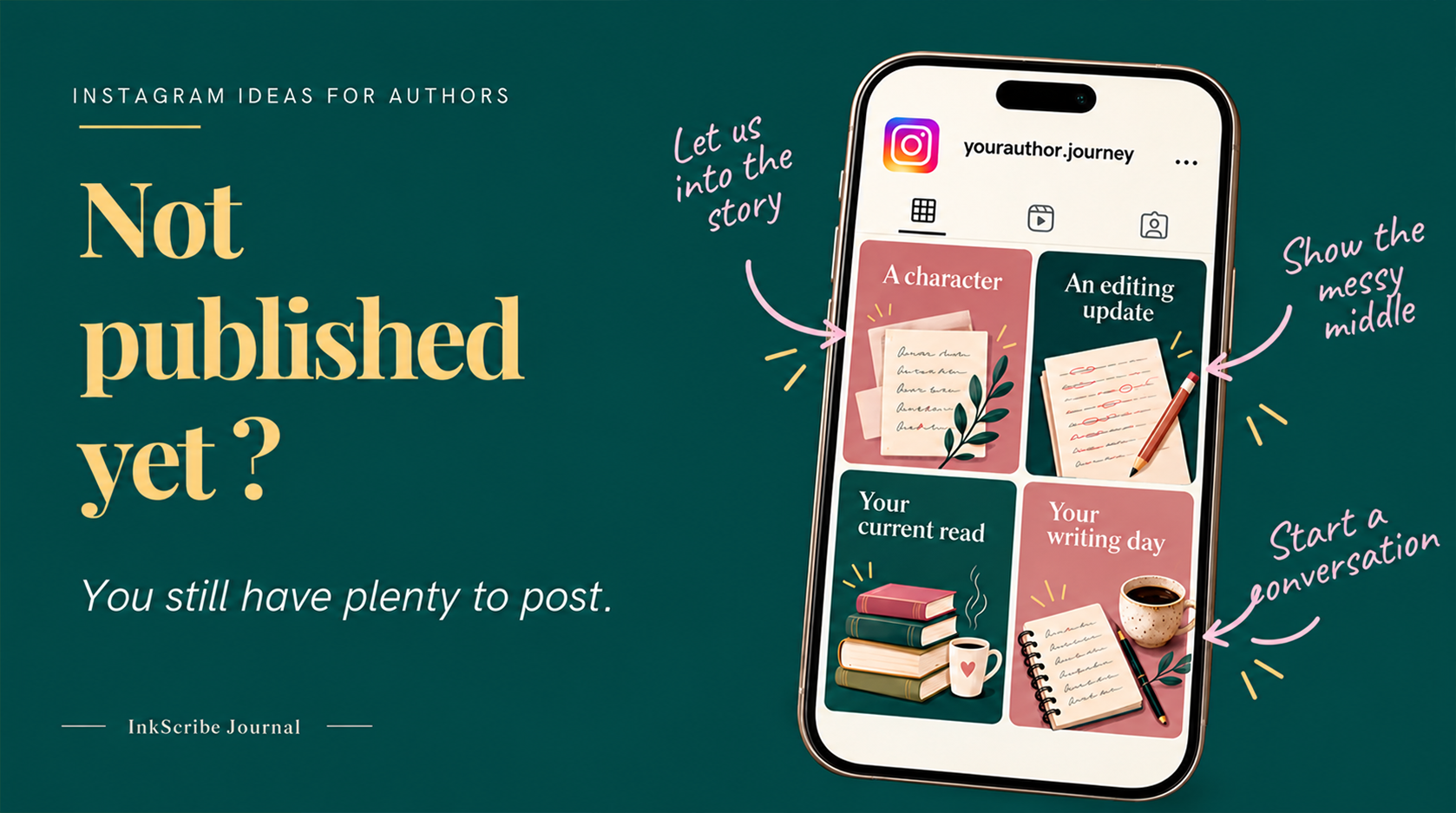
Bring the book. We'll help name the need.
Wherever your manuscript is today, a short conversation is a good place to begin.
Talk to a publishing coach