Marketing · 7 min read
What to post on Instagram before your book is out
Five things authors can share while the book is taking shape, with a free workbook to help you plan your next ten posts.
By Lekshmi Baskar
Your book isn't out yet. The cover is still a discussion. Chapter twelve is behaving badly. And now someone has told you that you should be posting on Instagram.
About what exactly?
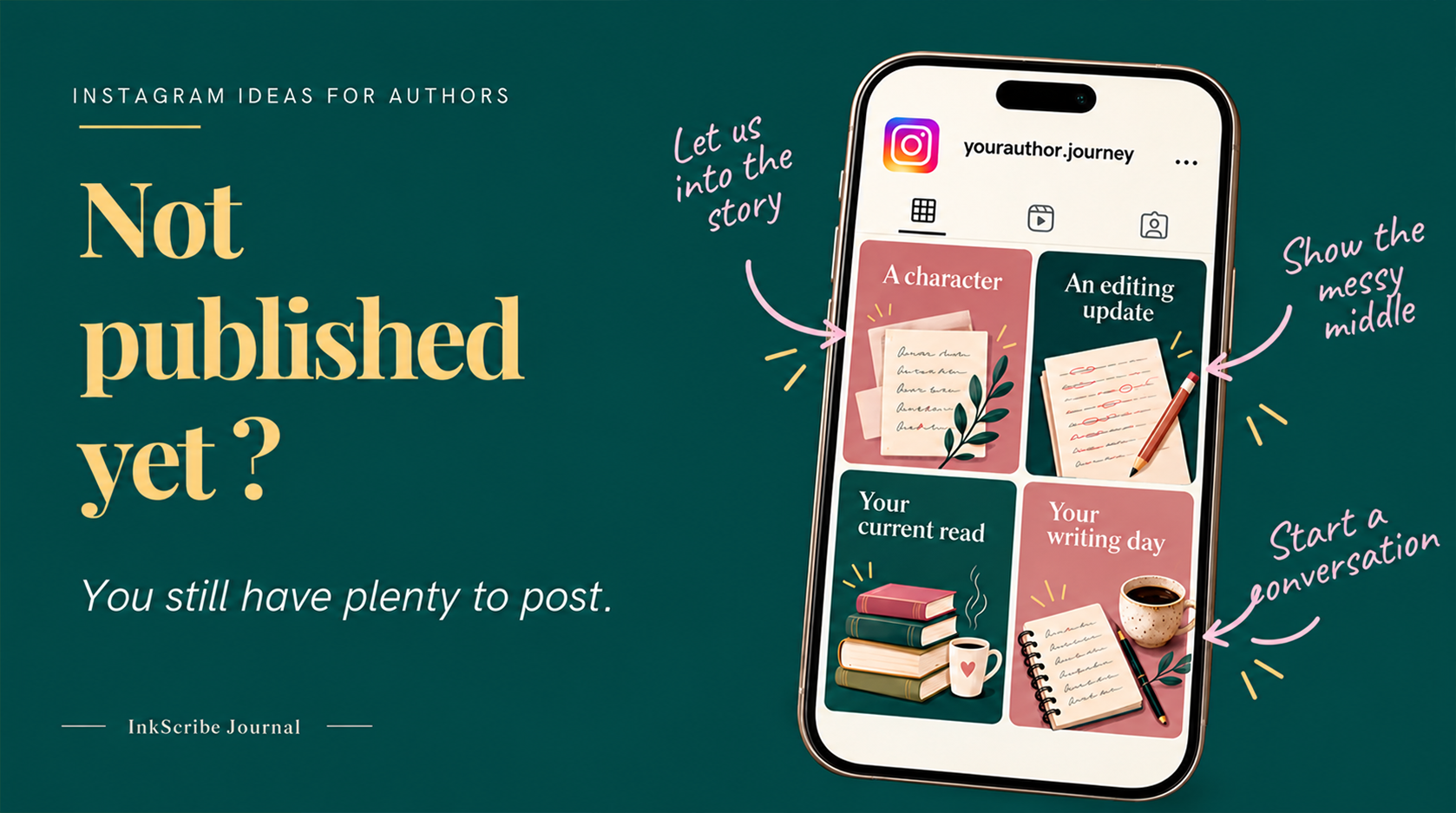
Quite a lot, actually. You can share the world of your book, the work of writing it, what you're reading, your bookish community and a little of your everyday life. None of that needs a finished manuscript or an Amazon link.
If you're looking for Instagram content ideas for writers/authors, start with what you already have. A scene you keep returning to. A question your book explores. A paragraph that finally sounds right. These give readers something to get curious about while the book is still taking shape.
Give readers something to recognise before launch day
Think about a book you were waiting for before it came out. Something had probably drawn you in already: the premise, the author, a familiar setting or a character who sounded like trouble.
Your posts can offer those small points of connection. Someone who has followed the editing, laughed at your title indecision or asked about a character has a reason to notice when the book arrives.
Penguin Random House's pre-launch guidance for authors recommends maintaining a social presence before publication and making room for posts beyond the book itself. You can start small and keep writing at the centre of your week.
Your book can be unfinished. The conversation around it can still begin.
Five content themes for an author Instagram account
Having a few themes to return to makes the next post easier to find. Try three posts about your book, three about making it, two about reading, one about the community and one about you.
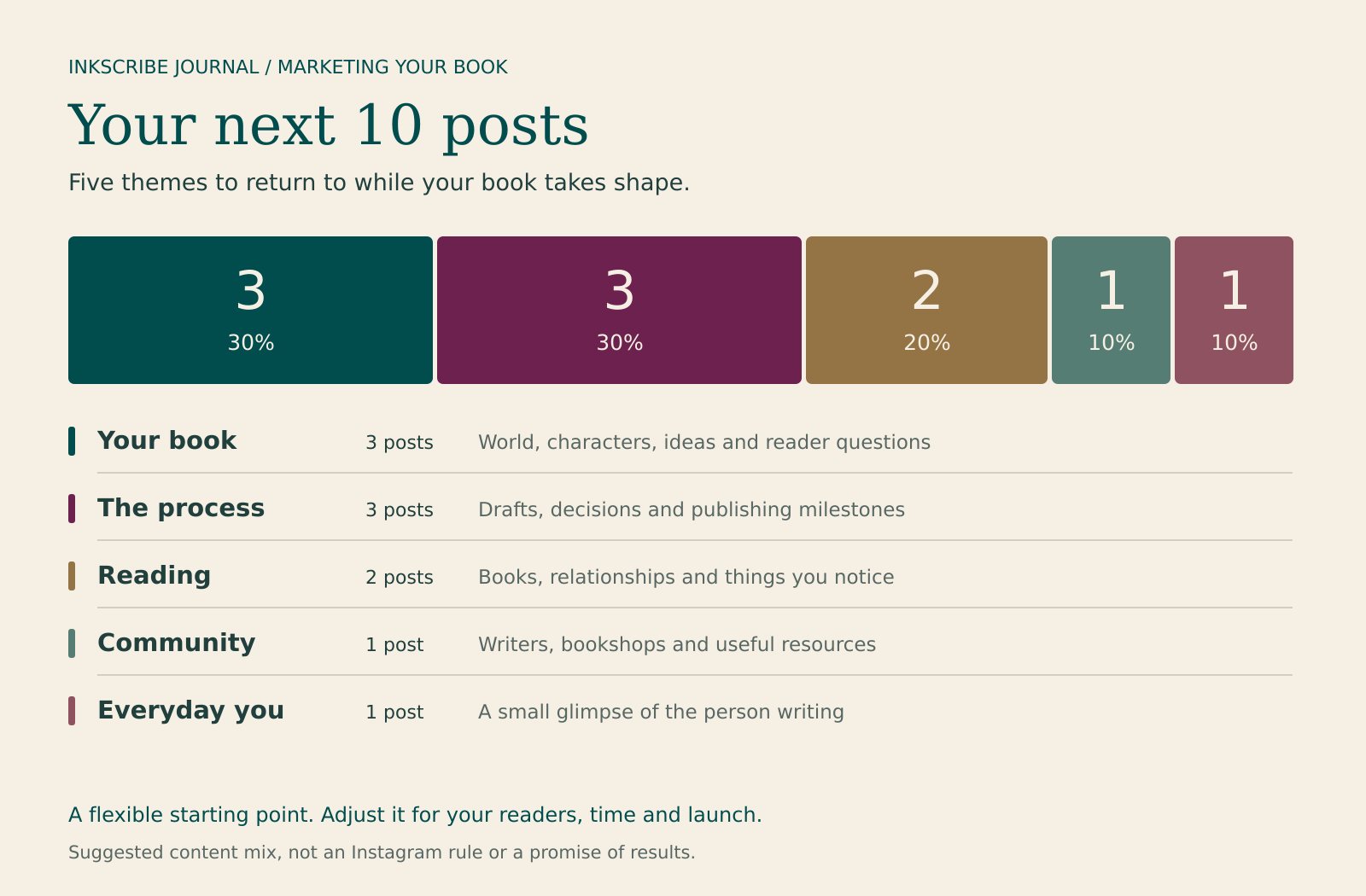
The 30/30/20/10/10 split is a flexible planning aid. It isn't an Instagram rule or a promise of reach or sales. Change the balance when your readers, workload or launch plans call for it.
Let readers into the world of your book
Help someone picture the experience your book offers. For fiction, that could be a place, a relationship or a character's difficult choice. Leave the ending to the book.
An imagined family novel might begin with a post like this:
An old yellow house. Two sisters who haven't spoken in eleven years. One monsoon that brings them home. That's where this story begins.
A moodboard or your own photograph of rain against a window could sit beside it. You don't need to introduce everyone in the family tree.
For nonfiction, begin with a question your reader recognises. A book about changing careers could explore why starting again feels difficult. Give someone a useful thought they can consider today, even before the book is available.
Show the book becoming a book
There is plenty to share between having an idea and holding a printed copy. A scene moves. A title changes. A friend’s opinion. Your editor asks a question you were hoping nobody would ask.
Show one piece of that work and explain what changed. An editing update could sound like this:
I cut the first two pages today. Apparently, the story started on page three. A mildly upsetting discovery, but here we are.
That gives a manuscript photograph some context. Your readers don't need to understand the whole book to recognise the frustration or the relief of finally getting something right.
Talk about what you are reading
Tell people about a character who stayed with you, a relationship you believed in or a writing choice you noticed because you're working on your own book.
You don't have to produce a formal review. Share one specific observation and ask a question someone can answer. A post about a memorable fictional family, for example, gives readers a way to join in through books they already know. Mark spoilers clearly.
Join the reading and writing community
Recommend a bookshop. Celebrate another author's release. Share something useful from a writing group or an event you enjoyed. Easier than it sounds!
Be specific about why you're sharing it. "I loved how this author writes about friendship" gives readers more to work with than a repost with no context. Credit the creator and use an authorised share or link when sharing their work.
Let people meet the person writing
You get to decide how much of your life belongs online. A small, comfortable glimpse is enough: the tea beside your notebook, a walk that helped untangle a scene, your spectacularly unhelpful desk companion.
If that companion is a dog who has fallen asleep through your entire writing session, we understand.
Connect the detail to your writing day. You can be approachable while keeping parts of your life private.
Plan your next ten posts with a little help
Knowing what you could share is useful. Deciding what to say when you're staring at a blank caption is another matter.
We've put together the free 10-Post Author Starter Plan to help with that part. Inside the eight-page workbook, you'll find:
- Ten prompts arranged into a suggested sequence.
- A caption starter and a visual idea for every post.
- Fiction and nonfiction angles to adapt to your own book.
- A planning sheet with room for your ideas and posting dates.
- A caption checklist and a short review to help you decide what to try again.
You can type into the PDF or print it. Start with the prompt that feels easiest; you don't have to use the order we've suggested.
Ten posts, at your pace. At two posts a week, that's five weeks of ideas.
Download my free 10-post planMake it easy for an interested reader to stay
Look at your profile before worrying about making more content. Would a new visitor understand what you're writing and where to go next?
Give your bio a clear description. "Writing my first novel about sisters, silence and coming home" tells someone more than "aspiring author" on its own. A pinned introduction can help new readers find their bearings.
If you have a website or reader newsletter, explain what people will find there. Otherwise, invite them to follow the book's progress. Ask a relevant question when a post calls for one, and make time to answer the replies.
When preorders open, share the link. When the book launches, tell people where they can get it. Those announcements belong in the mix too. BookBub's author social media examples include book promotion alongside writing updates and everyday life.
Questions authors often ask
When should I start posting about my book?
You can begin while you're writing or editing, once you have something you're comfortable sharing. A premise, a research detail or a question from the book is enough. You don't need to wait for the final cover.
Do I need a separate author Instagram account?
Only if it helps you. You can introduce your writing on an existing account when that feels comfortable. A separate account may suit you if you want clearer boundaries between personal updates and your public author identity.
Do I have to post Reels or show my face?
No. Photographs, carousels, text posts and stories give you other ways to share your work. Choose a format you can make comfortably. Try a video when it suits the idea and you want to make it.
How often should I post?
Start with a pace you can maintain. Two thoughtful posts a week is one possible starting point; one may be more realistic. Leave room for the book itself, and adjust when you learn what you enjoy making and what readers respond to.
Can Instagram guarantee book sales?
No. A reply, a profile visit and a purchase tell you different things. Notice which posts begin conversations or lead people to your book, while treating Instagram as one part of your publishing and marketing plan.
Ready to try this with your own manuscript? Get the free 10-Post Author Starter Plan and choose your first prompt.
What does your book need next
Your posts can help people discover the book. The editing, cover, description and availability also need attention. If you're working out the bigger picture, our guide to becoming a self-published author in India is a useful next stop.
And if you'd like help with your own book, tell us where the manuscript is today. You don't need a polished pitch to talk to an InkScribe publishing coach. You can also explore the publishing packages first.
Today’s question
What part of your book could you share this week, even if nobody has read a page of it yet?
Bring the book. We'll help name the need.
Wherever your manuscript is today, a short conversation is a good place to begin.
Talk to a publishing coach